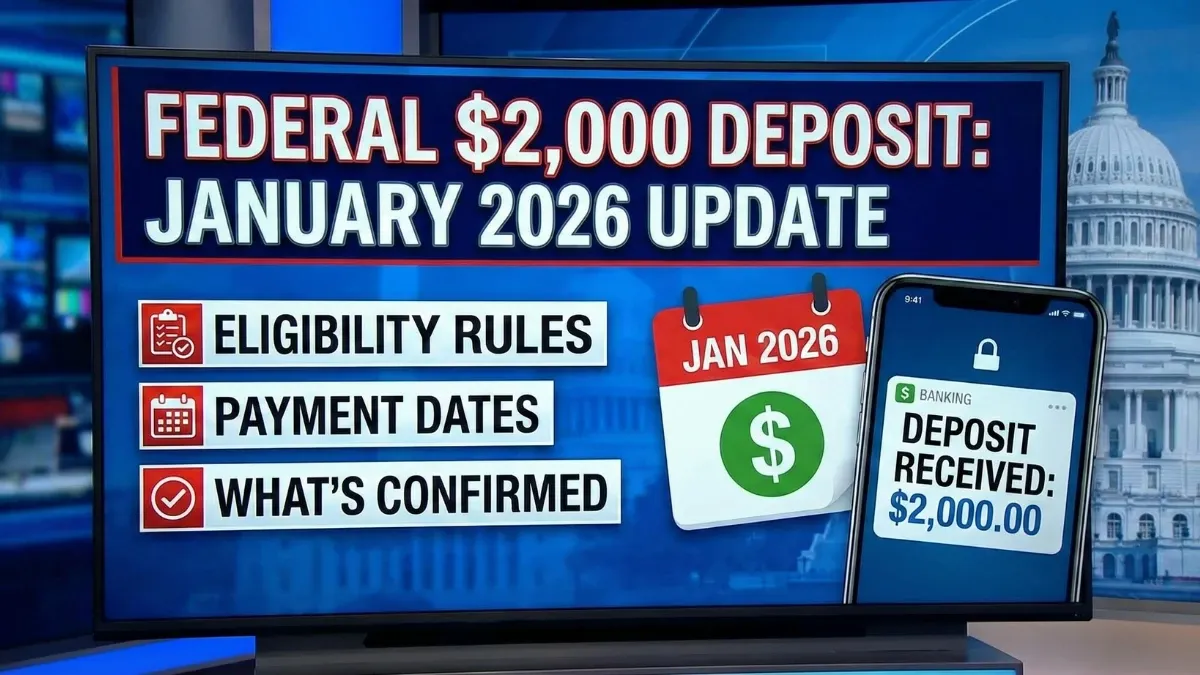
As January 2026 began, many Americans found themselves asking the same question again and again: is a $2,000 federal deposit really arriving this month? After a season filled with holiday spending, rising prices, and mounting bills, even the possibility of extra money brought a mix of hope and uncertainty. Online posts, forwarded messages, and bold headlines added to the confusion, making it difficult to separate facts from rumors.
The reality behind the $2,000 federal deposit is more grounded than many viral claims suggest. While no new stimulus program has been approved, millions of people are still receiving legitimate federal deposits around this amount. Understanding where this money comes from and who qualifies is the key to avoiding misinformation.
Is There a New $2,000 Federal Payment for Everyone?
There is no newly approved nationwide stimulus payment of $2,000 for all Americans in January 2026. Congress has not passed any legislation authorizing a universal check like those issued during the pandemic. Likewise, the IRS has not announced a brand-new relief program that sends money to everyone automatically.
यह भी पढ़े:
 $2000 Direct Deposit February 2026 Explained: Eligibility, Payment Dates, and IRS Instructions
However, this does not mean the $2,000 figure is entirely false. Many people are receiving deposits of similar amounts through existing federal systems. These payments are real, legal, and expected—but they are not guaranteed for everyone.
Why January Often Brings $2,000 Deposits
January is one of the busiest months of the year for federal payments. Several programs issue benefits, refunds, or adjustments at the start of the year. When these payments overlap, households may see larger deposits that appear unusual at first glance.
Early tax refunds, refundable tax credits, and regularly scheduled benefits often arrive close together. When combined, they frequently total around $2,000 or more. This overlap explains why so many people notice similar deposit amounts in January.

Understanding the Real Sources of These Payments
Most January deposits come from established federal programs rather than new relief initiatives. Early IRS tax refunds are a major source, especially for people who file their returns as soon as the tax season opens. Refundable credits can also increase the total amount significantly.
Other common sources include Social Security retirement benefits, SSDI, SSI payments, and IRS corrections or back payments. Each of these programs operates independently, but their timing often overlaps at the beginning of the year.
Who May Receive a Federal Deposit Around $2,000
Eligibility for a deposit depends on your personal financial situation, not citizenship alone. Taxpayers who file early and are owed refunds are among the most common recipients. Refunds can exceed $2,000 when too much tax was withheld during the year.
Low- and moderate-income workers who qualify for refundable credits often receive larger refunds. Families with children may also see higher amounts due to refundable portions of the Child Tax Credit. Some Social Security households receive totals near this figure depending on benefit type and household structure.
Social Security and Disability Payments in January
Social Security and disability benefits continue on their regular schedules in January. While these are not IRS payments, they still contribute to the overall perception of a federal deposit. For some households, the combined monthly benefit total approaches or exceeds $2,000.
SSI payments often arrive at the very start of the month, sometimes adjusted for weekends or holidays. These early deposits add to the belief that a special January payment is being issued.
January 2026 Payment Timing Explained
There is no single payment date tied to the $2,000 deposit. Each program follows its own schedule. Some benefits arrive in the first days of January, while others follow mid-month or late-month timelines.
IRS refunds typically arrive within seven to twenty-one days after a tax return is accepted. Taxpayers who choose direct deposit and file electronically usually receive funds faster. Paper checks often take longer due to processing and mailing delays.
IRS Guidance to Avoid Delays and Confusion
The IRS encourages taxpayers to file early and ensure all information is accurate. Small mistakes in bank details or income reporting can delay refunds by weeks. Using direct deposit is the fastest and safest way to receive money.
Taxpayers should track refunds only through official IRS tools. Relying on social media claims or unofficial messages can lead to unnecessary worry or financial risk.
Protecting Yourself From Scams
Whenever federal payments are discussed online, scammers quickly take advantage. Messages promising guaranteed deposits or asking for fees are always fraudulent. The IRS never contacts taxpayers through texts, emails, or social media.
Staying informed through official government websites is the best protection. If a claim sounds urgent or too good to be true, it usually is.
Why This Matters to American Households
The attention around the $2,000 deposit reflects real financial stress across the country. Rising costs make even routine refunds feel critical. For many families, January money helps pay rent, utilities, medical bills, or credit card balances.
Understanding where the money comes from allows families to plan rather than panic. Clear information brings peace of mind during an already stressful time of year.
The federal $2,000 deposit discussed in January 2026 is not a new stimulus payment. Instead, it represents routine federal refunds and benefits paid to eligible individuals through existing programs. While many people receive deposits close to this amount, eligibility depends entirely on personal circumstances.
By filing taxes correctly, choosing direct deposit, and relying on official guidance, Americans can navigate January with confidence. Knowing the facts replaces rumors with clarity and helps households start the year on steadier financial ground.
Disclaimer
This article is provided for informational purposes only and does not constitute tax, legal, or financial advice. Federal payment programs, refund timelines, and eligibility rules may change. Individuals should consult official IRS resources or qualified professionals for advice specific to their situation.